| |
THIS ISSUE'S HEADLINES
Federal Court Nullifies and Revokes FLSA’s New Minimum Salary Exemption Requirements
Are Forum Selection Clauses Enforceable In Business Disputes? RI Superior Court Weighs In
Minority Shareholders’ Risks and Rights in a Company Sale

FEDERAL COURT NULLIFIES AND REVOKES FLSA’S NEW MINIMUM SALARY EXEMPTION REQUIREMENTS
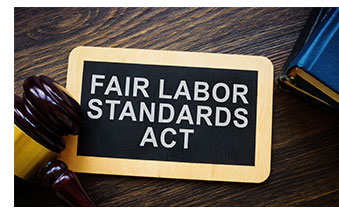 A federal court in Texas recently held that the United States Department of Labor (“DOL”) exceeded its statutory authority by raising the minimum salary threshold for exempt employees under the Fair Labor Standards Act (“FLSA”), by way of the Act’s executive, administrative, or professional exemption. As a reminder, as of July 1, 2024, the minimum salary threshold increased to $43,888.00, or from approximately $684.00 per week to $844.00 per week. Of note, the DOL provided that this increase shifted approximately one million employees to exempt status, despite no changes in their job duties. Additionally, the minimum salary threshold was to increase again on January 1, 2025, to $58,656.00, or approximately $1,128.00 per week, with additional increases to take place every three years. A federal court in Texas recently held that the United States Department of Labor (“DOL”) exceeded its statutory authority by raising the minimum salary threshold for exempt employees under the Fair Labor Standards Act (“FLSA”), by way of the Act’s executive, administrative, or professional exemption. As a reminder, as of July 1, 2024, the minimum salary threshold increased to $43,888.00, or from approximately $684.00 per week to $844.00 per week. Of note, the DOL provided that this increase shifted approximately one million employees to exempt status, despite no changes in their job duties. Additionally, the minimum salary threshold was to increase again on January 1, 2025, to $58,656.00, or approximately $1,128.00 per week, with additional increases to take place every three years.
In Plano Chamber of Commerce, et al v. United States Department of Labor, et al., the United States District Court for the Eastern District of Texas struck down the new requirements. The Court held, in part, that the “sweeping changes” in the new requirements worked to “effectively displace the FLSA’s duties test with a predominate—if not exclusive—salary-level test.” The well-established, three-part duties test first looks to the nature of an employee’s work, or in other words, whether it is executive, administrative, or professional, which requires an evaluation of the employee’s particular job duties. Step two is determining whether the employee has a predetermined or fixed salary. The final step looks to whether the employee’s salary is more than the weekly minimum amount established by the DOL. The Court held, in part, that the DOL exceeded its statutory authority by implementing the new salary requirement because the requirement forced a shift in focus to the employee’s salary rather than the employee’s job duties. The Court also explicitly discussed the enormous economic impact these requirements have had, and would have, on employers moving forward. The Court determined that the proper remedy was to “nullify and revoke” the new requirements.
It is unlikely that the DOL will challenge the Court’s decision, given that the Biden administration is coming to an end in January 2025. If you have questions or would like more information, please contact PLDO Associate Kathryn M. Couture at 401-824-5100 or kcouture@pldolaw.com.
[back to top]
ARE FORUM SELECTION CLAUSES ENFORCEABLE IN BUSINESS DISPUTES? RI SUPERIOR COURT WEIGHS IN
 A forum selection clause is a provision within a contract that spells out the court or jurisdiction where any dispute must be resolved. The chosen forum can be a specific country, state, or even a particular court. In recent decades, most state and federal courts have come around to the view that forum selection clauses are presumptively enforceable. Their importance lies in the fact that, in the event of litigation over a provision of the contract, the forum in which the contract is litigated may, in very large part, be determinative of the outcome of the litigation. A forum selection clause is a provision within a contract that spells out the court or jurisdiction where any dispute must be resolved. The chosen forum can be a specific country, state, or even a particular court. In recent decades, most state and federal courts have come around to the view that forum selection clauses are presumptively enforceable. Their importance lies in the fact that, in the event of litigation over a provision of the contract, the forum in which the contract is litigated may, in very large part, be determinative of the outcome of the litigation.
Recently, in the case of Greenwich Business Capital, LLC, v. Danielle M. Desrosiers, et al (Rhode Island Superior Court Case Number C.A. KC-2023-1056, issued December 6, 2024) (“Greenwich”), Superior Court Associate Justice Licht had occasion to delve into the enforcement of forum selection clauses. In Greenwich, Justice Licht explained, in most relevant part, that forum selection clauses are “prima facie valid”, but “are subject to judicial scrutiny for fundamental fairness.” Justice Licht’s decision then proceeded to set out the nine factors that Rhode Island courts consider for determining the reasonableness and enforceability of a forum selection clause: (1) the identity of the law that governs the contract; (2) the place of execution of the contract; (3) the place where transactions are to be performed; (4) the availability of remedies in the designated forum; (5) the public policy of the initial forum state; (6) the location of the parties, the convenience of the prospective witnesses, and the accessibility of evidence; (7) the relative bargaining power of the parties and the circumstances surrounding their dealings; (8) the presence or absence of fraud, undue influence or other extenuating circumstances; and (9) the conduct of the parties.
However, notwithstanding these nine factors, Justice Licht, in Greenwich, went on to explain, that Rhode Island courts should give effect to freely negotiated forum selection clauses agreed to by two businesses of equal bargaining power dealing at arm’s length. That is, the totality of the circumstances, measured in the interests of justice, will and should ultimately control the contracting parties’ enumeration of a forum selection clause within a contract.
Forum selection clauses are more than mere boilerplate language in a business contract. If effectively enforced, they can reduce uncertainties in a business dispute and potentially avert having to litigate in a foreign jurisdiction. Companies doing business in Rhode Island, or those that may in the future look to a Rhode Island court to adjudicate a contract dispute, should carefully consider Greenwich’s decision and the factors used to determine the reasonableness and enforceability of a forum selection clause.
If you have any questions related to contract disputes, jurisdiction or other litigation matters, please contact PLDO Partner Aaron L. Weisman at 401-824-5100 or email aweisman@pldolaw.com.
[back to top]
MINORITY SHAREHOLDERS’ RISKS AND RIGHTS IN A COMPANY SALE
 Minority shareholders of a business face unique challenges. Unlike majority owners, a person or entity that owns less than 51% of a company's shares lacks the voting power to directly influence the company’s direction, giving them limited control over business decisions. While majority shareholders tend to have the upper hand in transactional deals, minority shareholders have several rights that they should exercise and protect. Minority shareholders of a business face unique challenges. Unlike majority owners, a person or entity that owns less than 51% of a company's shares lacks the voting power to directly influence the company’s direction, giving them limited control over business decisions. While majority shareholders tend to have the upper hand in transactional deals, minority shareholders have several rights that they should exercise and protect.
PLDO Principal Gary R. Pannone outlines the key questions that minority shareholders should ask in the event of a company acquisition as it relates to valuation, disclosures and transparency, exit strategies and statutes that protect minority shareholders’ rights. To access the Advisory, click here.
If you have questions or would like further information, please contact Attorney Pannone at 401-824-5100 or gpannone@pldolaw.com.
[back to top]
|
 |